

Viking Line reduces emissions by using modern fuels
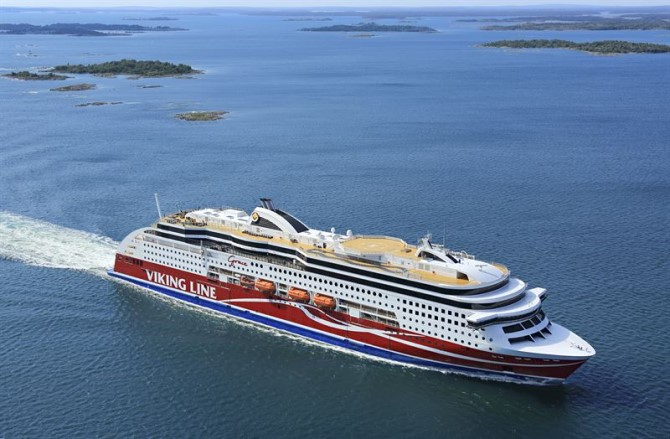
Source: vikingline.com
Viking Line’s focused environmental work, which began in the 1980s, once again shows the way for the entire maritime shipping industry. In June, the company began offering passengers on its Turku-Aland-Stockholm route the option of reducing the climate impact of their travel.
Starting September 7th, Viking Line makes it even possible for its freight customers on the Turku-Aland-Stockholm route to reduce emissions from the sea transport of their freight units by up to 90 per cent (“well-to-wake”). The emission reductions are achieved by fueling the vessels with renewable liquefied biogas (LBG) in proportion to the amount of energy used for the transport of customer freight units.
The LBG Viking Line is using originates from Europe and is produced from waste materials. The LBG is delivered by the Nordic energy company Gasum to Viking Line’s climate-smart vessels Viking Glory and Viking Grace on the Turku-Aland-Stockholm route.
In biogas production, societal waste streams such as food and agricultural waste are used as feedstock, which promotes a circular economy. Every LBG delivery comes with a sustainability certificate, specifying the origin of the feedstock. The entire LBG production process is ISSC certified and carefully monitored by third parties. In practice, Viking Line purchases LBG based on customer demand. The LBG is mixed in with the ships’ standard fuel, liquefied natural gas (LNG).
"This really is an important milestone in our more than 40-year sustainability journey. We are the first shipping company on the Baltic Sea to offer passengers and freight customers the option of reducing their carbon footprint by replacing LNG with renewable biofuel." says Dani Lindberg, Sustainability Manager at Viking Line.
“We are very proud and excited to be the first one offering this opportunity, not only for the international transport sector but also to the export/import industry in Finland to choose a more environment friendly sea-crossing for their freight units and for the goods – a sea transport based on biogas produced from renewable energy.” says Harri Tamminen, Vice President, Freight at Viking Line.
Source:
[Viking Line Cargo]